

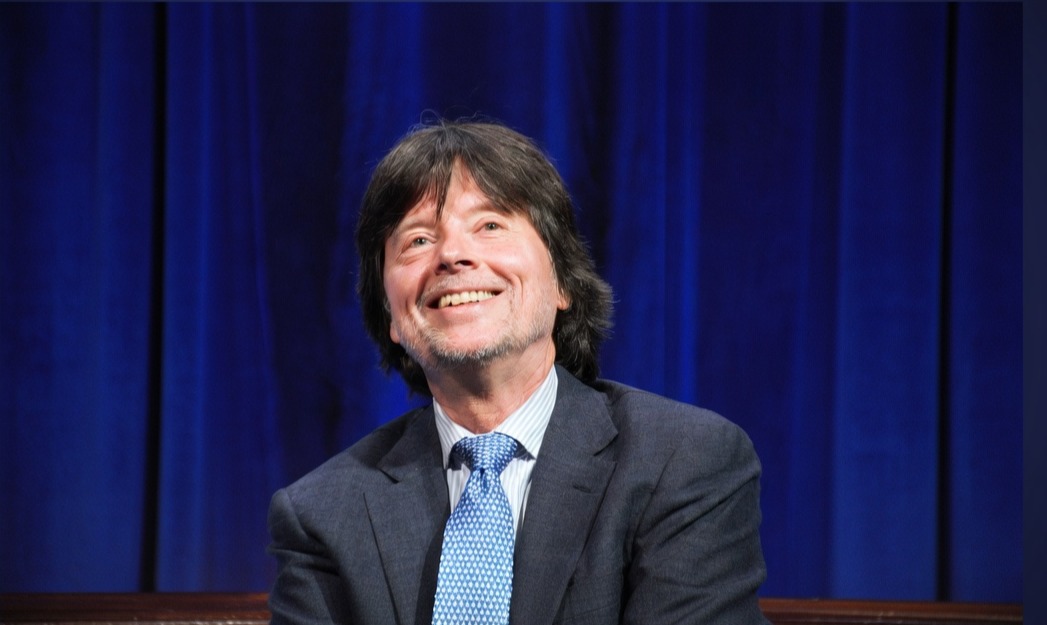
I tuned in recently to Conan O’Brien’s podcast — because, like any serious person, I get my news from only the most reputable sources — and much to my delight, his guest was a favorite filmmaker of mine: documentarian Ken Burns.
I like Ken Burns very much. He is, to history nerds like me, what Jane Austen is to English lit majors: a romantic figure, a storyteller who has the rare ability to make the past feel like something personal, something you inhabit rather than merely observe. But more than that, I admire the man. He is one of the most decent, intelligent, thoughtful, and serious public figures in America, a man who represents something genuinely noble about this country. He’s a proud Democrat — he calls himself a “yellow dog” Democrat, because he’d sooner vote for a yellow dog than a Republican — and yet I never saw him as a partisan. Instead, when I try to think of the sort of conservative I want to be, it’s one with whom a man like Burns could respectfully disagree, if not find common ground. He is of that rare breed who causes me to reconsider my own position if ours are not aligned. He is curious, has a certain clear-eyed patriotism, is learned without that annoying pedantry that seems to come with the territory, and truly wants the best for this country. He loves America in a real way, warts and all, and rebukes those who see only its failures. He loves its story, its grandeur, its shortcomings, its possibilities, and its contradictions. He treats the country as something worth understanding, and more than that, worth preserving. In an age where one side seems to hate the government and the other side hates the country and we all just hate each other, there’s something almost miraculous about a man who still seems to believe that America is worth taking seriously.
Let me be clear, then, that what follows is not an attack on Ken Burns. Rather, it is an expression of humble, and minor disappointment in a man I admire, precisely because I admire him.
I listened to the interview with Conan with great delight, and indeed, Burns displayed many of the qualities that make him admirable: his eloquence, his humanity, his casual confidence and steady stewardship reminiscent of what I imagine FDR’s fireside chats were like. He spoke beautifully about history, about America, about the need to resist reductionism, about the danger of turning one’s fellow citizens into “them.” He emphasized the moral and civic necessity of seeing one another as members of a common national project, rather than as enemies to be destroyed. All of that is admirable and true and needed.
And yet, in the midst of all that wisdom, he also revealed a very tired and very telling liberal blind spot when he declared, without any sense of irony, that the great success of the Republican Party over the years has been to convince voters to vote against their own interests.
Sigh. Et tu, Ken Burns?
I don’t know what it is about liberalism that causes otherwise intelligent and decent people to speak about Republican voters not as fellow citizens making reasoned moral and political choices, but as manipulated, frightened, or deluded dullards who are somehow voting against their own interests.
That phrase alone, “voting against their own interests,” is almost impossibly arrogant. It assumes that the speaker knows better than millions of other people, who he has never met, what their interests even are. That he knows best how to advance their individual material or economic wellbeing. It assumes that their concerns about culture, community, religion, public order, national cohesion, moral formation, family stability, crime, immigration, and the integrity of social norms are illusory or secondary, or somehow suspect. Why even have representative government if Ken Burns knows better than half the country what they need; if all those who disagree with liberal priorities do so because they are stupid, or worse, sinister? This is the language of a class that mistakes disagreement for confusion, and presumes that dissent must be explained rather than answered.
Can Burns not at least entertain the possibility that Republican voters have good reason to believe that they are better off without a government handout, and a centrally planned economy? Perhaps there is some merit to living in a country with secure borders, social trust, safe neighborhoods, functional schools, religious liberty, and limits on bureaucratic overreach. Perhaps they have watched Democrats claim the mantle of compassion while presiding over policies that are chaotic, coercive, destructive, that harm the very people they are supposedly trying to help, and are detached from the lived realities of ordinary people. Perhaps Republicans look at the results and, with very good reason, do not believe that Democratic elites really have their interests at heart at all.
Good grief, if anybody is voting against their own interests, it is those most loyal to the Democrat politicians who do nothing for their constituents, who keep their own voters in a perpetual state of poverty, who trap their kids in failing public schools, who drive away the middle class, who discourage investment and jobs, who make sure dangerous people are not removed from the streets of Democratic cities, and whose answer to everything is to follow the economic model of failed nations. But I guess they know better.
What makes this even more frustrating is that Ken Burns, the filmmaker, does know better. In his documentaries, he goes out of his way to incorporate voices from all sides, even voices that make modern audiences uncomfortable. In his magnum opus, The Civil War, he prominently features southern historian Shelby Foote, a man who comes dangerously close to Confederate sympathy. And yet Burns does not exclude him, nor caricature him. He features him, and treats him as a serious voice in the American story, because he understands that the story cannot be told honestly without him.
That instinct is exactly right. America is not a story of angels versus demons. It is a story of human beings, all of us flawed, all of us situated in particular times and places, all of us acting from a mixture of motives. Burns understands that when he is behind the camera.
But when he steps out from behind the camera and into conversation, that instinct seems to falter. The same man who knows how to treat a Confederate-leaning historian as a voice worth hearing, suddenly speaks about modern conservatives as though they are, at best, misled and, at worst, morally suspect. The generosity he extends to historical figures he withholds from living fellow citizens.
To intimate, as he does through the interview with Conan, that Republicans are merely playing on people’s fears, and that their concerns about immigration are simply a modern reprise of old xenophobic demonization, is not serious enough, and it is not worthy of a man of Burns’s intelligence or character. Yes, fear can be manipulated in politics. Yes, demagoguery is real. Yes, immigrants have often been slandered in ugly and unjust ways throughout history. All of that is true. But it does not follow that every concern about immigration is irrational, malicious, or morally suspect. It does not follow that middle Americans who worry about wages, housing, social strain, crime, assimilation, or the basic meaning of citizenship are merely acting out some ancient prejudice in a modern form.
This is the irony of Burns, that a man so sensitive to the moral danger of reducing people to categories, himself reduces half of his own countrymen to exactly the kind of category he warns against. He says there is no “them,” and then speaks as though Republican voters are a mass of people operating under illusion, fear, and manipulation, ruining everything for everyone else, by repeating the mistakes, and evils of history.
And that, to me, is a central failure. A republic depends not merely on disagreement, but on the assumption that one’s opponents are capable of reasoning, even when they reason badly.
Now, there is a mirror problem on the Right, and I would be dishonest not to say so. Conservatives do this too. Very often we speak of Democrats as though they are not fellow citizens with competing moral priorities, but groomers, nihilists, parasites, traitors, lunatics, and fools. We flatten them into caricatures. We assume that every liberal impulse must spring from corruption or stupidity, rather than from genuine, if misguided, moral concern. We deny complexity when it is politically convenient. We indulge contempt as readily as anyone on the Left. So this is not a sermon pointed in one direction only. It is a description of a broader national sickness.
And that is precisely why Burns’s failure matters, because he is the kind of person who ought to be helping us out of this sickness. He is one of the few public figures whose geniality, seriousness, and overall decency and goodwill still commands respect across ideological lines. When he slips into this cheap and dismissive mode, he is not merely making a mistake, he is missing an opportunity.
I cannot bring myself to be cynical about him, because there is too much in him to admire. I still think he is everything that is right about America. I think he represents a love of country that is rooted in gratitude, reflection, and moral seriousness, rather than in slogans and chest-thumping. I think his work reminds Americans that we belong to something larger than the news cycle, our tribal resentments, even than our own momentary crises. He sees America as a story worth telling honestly, which is very different from those who either mythologize it into nonsense or denounce it into meaninglessness. He has done immense good by helping Americans see their country in full: its glory, its cruelty, its grandeur, its shame, its resilience, and its promise.
But he is also a little bit of what is wrong with America. He embodies that familiar and maddening tendency of educated liberal patriotism to speak beautifully of unity, while failing to understand the actual people who make up half the country; to claim to welcome competing ideas, and then recoil to find there are competing ideas; to preach empathy in the abstract while withholding it from one’s nearest political opponents; and to assume that moral seriousness resides only on his side of the partisan divide, and that the other side is driven mainly by malevolent forces. He is, in other words, a profoundly admirable man who nonetheless illustrates one of the habits that is helping to tear us apart.
That is why he is worth criticizing. And that is also why he is worth listening to. The health of a democratic culture depends on the ability to do both at once. And it depends greatly on men like Ken Burns.
You may also be interested in:
- The Goodness of Democrats – Conservative Opinion
- Democrats Killed Public Broadcasting – Conservative Opinion
- Musk is Wrong: Empathy is Our Strength – Conservative Opinion
- Lack of Solemnity Threatens Conservatism, and the Nation – Conservative Opinion
- Why Jordan Peterson Still Won’t Call Himself a Christian – Conservative Opinion
- Note to Don Lemon: The Press Is Not Above the Law – Conservative Opinion