

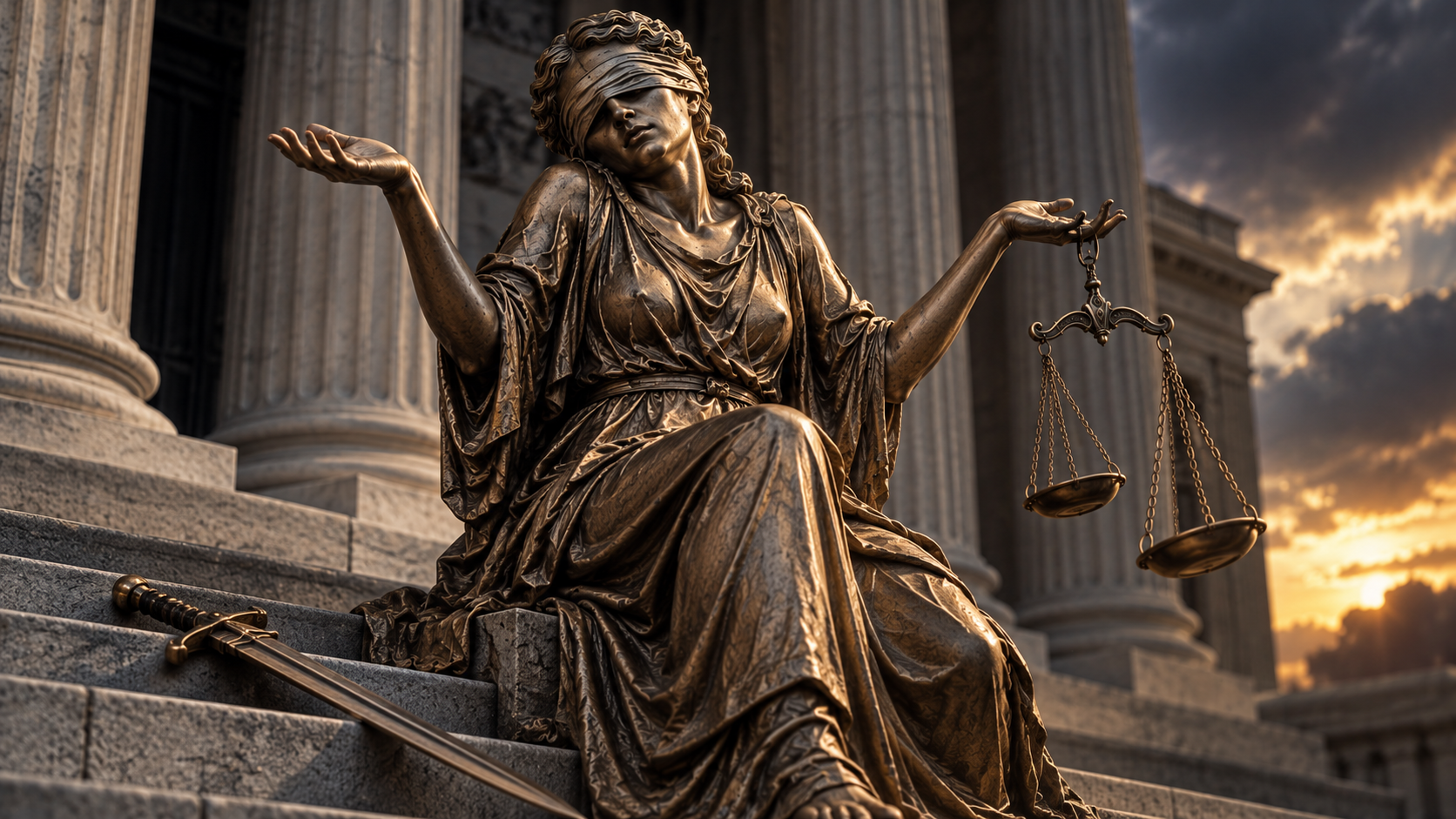
Prosecutorial Discretion is not an Ethical Exemption
Imagine, for a moment, that a group of ardently conservative attorneys came to believe that the American criminal justice system had become intolerably lenient toward criminal defendants, and they therefore decided to become public defenders. Not, mind you, because they had experienced some profound conversion concerning the importance of zealous representation, or because they had developed an abiding affection for the constitutional rights of the accused. But because they understood that the most effective way to undermine an institution is sometimes to infiltrate the institution itself. Why labor to persuade legislators to curtail defendants’ rights when one might simply arrange for those rights to go undefended?
And so, having secured their positions, they proceeded to implement their philosophy, and not provide their clients with the zealous representation they deserve in order that more of them be convicted of crimes. Suppression motions went unfiled because the attorneys personally disapproved of the constitutional doctrines upon which those motions depended. Potentially successful defenses were abandoned because they offended the lawyers’ sensibilities. Exculpatory witnesses were left uncalled. Favorable plea negotiations were discouraged because the attorneys believed that their clients deserved considerably more punishment than the prosecution was prepared to offer. Eventually, in the interest of administrative efficiency, these conservative activist public defenders reduced these convictions to written office policies, directing subordinate attorneys to refrain from pursuing entire categories of lawful defenses. After all, why should something as antiquated as a lawyer’s professional obligations interfere with the advancement of a more enlightened criminal justice philosophy?
The resulting disciplinary proceedings would be swift and not particularly controversial. Nobody would mistake this sort of conduct for the legitimate exercise of professional judgment, and nobody would be especially moved by the sincerity of their political convictions. We would recognize the arrangement for precisely what it was: a deliberate betrayal of the interests these attorneys had undertaken to represent.
Now consider what happens when we reverse the political orientation and substitute prosecutors for public defenders. Because that’s exactly what’s going on, while disciplinary committees do nothing.
For years, a movement of ideologically motivated prosecutors has advanced the rather extraordinary proposition that the enormous discretion entrusted to prosecuting attorneys may be employed not merely to make individualized judgments concerning evidence, culpability, punishment, and mercy, but to accomplish through systematic non-enforcement what their political allies have been unable, or unwilling, to accomplish through the democratic process. Legislatures enact laws, prescribe penalties, and establish the public policies that those laws are intended to vindicate. But these activist prosecutors, finding some of those policies objectionable, announce that entire categories of offenses, or people, will no longer be meaningfully prosecuted.
And whenever anyone has the temerity to question this curious arrangement, the response arrives with the reassuring solemnity of an incantation: “prosecutorial discretion,” a phrase is invoked as though it were some ancient constitutional sacrament, capable of absolving virtually any departure from the responsibilities of prosecutorial office. But prosecutorial discretion is neither a magic spell nor a legislative power, nor can it be without limit. It does not suspend the Rules of Professional Conduct, confer upon a district attorney the authority of a miniature legislature, or transform a prosecutor’s personal political preferences into a substitute for duly enacted law.
Certainly, prosecutors possess discretion, and a civilized criminal justice system could scarcely function without it. Not every offense that can be prosecuted should be prosecuted, and not every defendant who deserves punishment deserves the maximum punishment the law permits. Justice, properly understood, is not a mechanical exercise in extracting the greatest possible penalty from every available statute.
I say this as someone who serves as a prosecutor myself, and who understands that the exercise of prosecutorial judgment sometimes requires considerably more courage than the reflexive pursuit of a conviction. There are circumstances in which mercy serves the public interest more faithfully than severity. The prosecutor’s obligation is not to accumulate convictions as though they were trophies, but to pursue justice according to law. Indeed, the prosecutor who cannot distinguish between those objectives has probably misunderstood the office he occupies.
But notice what I said there: mercy is appropriate when it serves the public interest. There is a distinction of almost immeasurable importance between exercising discretion under the law and exercising discretion against the law. The former is an indispensable feature of prosecutorial responsibility. The latter, when carried to its ideological conclusion, begins to resemble something altogether different: an abandonment of one’s professional responsibilities.
A prosecutor who examines the circumstances of a particular case and concludes that prosecution would not advance the interests of justice is exercising the judgment his office requires. A prosecutor who determines that an entire category of duly enacted laws represents objectionable public policy, or that an entire category of criminals are really the victims, and consequently establishes an institutional program designed to prevent those laws from operating, has crossed into fundamentally different territory. He is no longer deciding how the law should be administered in an individual case, but whether the law should be permitted to function within his jurisdiction at all.
This raises a question that has received remarkably little attention in our endless political arguments over criminal justice reform: Why have we treated this exclusively as a controversy over public policy when the officials engaging in this conduct are also attorneys, subject to the same professional disciplinary system that governs every other member of the bar?
The distinction is not merely academic. In New Jersey, where I practice, it has a particularly interesting foundation in an ethics case called In re Segal, 130 N.J. 468 (1992), wherein the New Jersey Supreme Court considered disciplinary proceedings against a Cherry Hill prosecutor whose preparation and presentation of the State’s case had fallen substantially below the professional standards required of an attorney. The underlying prosecution involved an unsafe vehicle, a fatal accident, and serious personal injury. The prosecutor failed to prepare adequately for trial and failed to present relevant evidence, with the result that the municipal court ultimately entered a judgment of acquittal. Disciplinary charges followed, alleging gross negligence in violation of RPC 1.1(a) and lack of diligence in violation of RPC 1.3. The Supreme Court sustained the violations and imposed a public reprimand.
The sanction itself was hardly earth-shattering. What makes the decision important is the Court’s explanation of the professional relationship between the prosecutor and the sovereign whose interests he is entrusted to represent. As the Court observed, the State is the prosecutor’s client, so the prosecutor’s failure to discharge the obligations of his office implicates his professional responsibility:
“Because the State is the municipal prosecutor’s client, a failure to discharge the obligations of his office is a violation of a prosecutor’s professional responsibility to represent the client diligently. When a prosecutor has available relevant evidence bearing on a prosecution, and the prosecutor’s failure to present that evidence in the course of trial results in acquittal, that prosecutor has not diligently discharged his or her duty to prepare and present the State’s case. Furthermore, when the failure to prepare for trial and present relevant evidence prejudices the State’s case, the prosecutor’s deviation from that duty may be so severe as to constitute gross negligence.” In re Segal, 130 N.J. 468, 480, 617 A.2d 238, 244 (1992).
That proposition deserves considerably more attention than it has received.
Our discussions of prosecutorial ethics ordinarily concern the duties prosecutors owe to criminal defendants, and rightly so. A prosecutor may not conceal exculpatory evidence, mislead a tribunal, knowingly present false testimony, or pursue a conviction through improper means. These obligations are essential to the administration of justice, and any prosecutor who regards them as inconvenient obstacles to securing convictions has no business exercising the powers of the State. The extraordinary authority to prosecute one’s fellow citizens carries with it an equally extraordinary obligation to respect their rights.
But the prosecutor’s ethical obligations do not run exclusively in the direction of the accused. The State is not some incidental spectator at its own proceedings, and the prosecutor is not a free agent entitled to disregard its legitimate interests whenever those interests become incompatible with his personal philosophy. As Segal makes clear, the prosecutor must diligently represent his client. He must prepare the State’s case, examine the applicable evidence and law, select and prepare witnesses, and diligently discharge the responsibilities of prosecutorial office. The fact that the prosecutor represents the public interest rather than an ordinary private client does not relieve him of professional obligations to his client. It helps define the obligations he must fulfill.
And this brings us to a question that ought to cause considerable discomfort among those who have transformed prosecutorial non-enforcement into an ideological enterprise. If a prosecutor may be professionally disciplined for failing, through gross negligence, to discharge his responsibilities to the State, why should the deliberate abandonment of those same responsibilities become ethically unassailable merely because it is undertaken as a matter of political conviction?
There is something almost comical about the proposition. Ordinarily, we regard deliberate misconduct as more serious than negligent misconduct, not less. Yet our contemporary political discourse has managed to construct a peculiar sanctuary around ideologically motivated prosecutorial non-enforcement. Fail to discharge your professional obligations through carelessness, and you may find yourself answering to a disciplinary authority. Fail to discharge your professional obligations deliberately, and suddenly the very suggestion of professional accountability is treated as an assault upon prosecutorial independence.
It is here that the argument must move beyond political criticism and into the realm of professional accountability. Where the facts and governing law warrant it, disciplinary authorities should be asked to examine whether categorical ideological non-enforcement violates the obligations prosecutors owe to the sovereign and to the administration of justice. Such an inquiry should be grounded not in political indignation, but in evidence: written office directives, publicly announced charging policies, applicable statutory mandates, representative prosecutions, documented failures to perform identifiable duties, and the disciplinary precedents defining the responsibilities of prosecuting attorneys. Those materials should then be examined with the same seriousness that would attend an allegation of professional misconduct against any other lawyer.
This is not an argument that every decision to decline prosecution constitutes an ethical violation, or that every diversionary program, lenient plea agreement, or allocation of scarce prosecutorial resources is somehow suspect. Such a position would be legally indefensible and practically absurd. The question, rather, is whether there exists a point at which the exercise of discretion ceases to be the administration of law and becomes the deliberate substitution of a prosecutor’s political program for the law itself. If such a boundary exists, as I believe it must, then the legal profession ought to be capable of identifying it. And if the boundary carries professional consequences, the institutions responsible for attorney discipline ought not to be reluctant to say so.
This, by the way, should be embraced by the progressive Left, they with their endless proposals for new laws and greater regulations which, presumably, they want enforced. Imagine that tomorrow an intensely conservative district attorney announced that his office would no longer prosecute violations of certain gun-control statutes because he personally regarded those statutes as unconstitutional. Imagine another announcing that environmental crimes would henceforth receive no meaningful enforcement because environmental regulation was, in his considered opinion, little more than left-wing hysteria dressed in the respectable clothing of administrative law. Imagine a third, persuaded that taxation amounted to legalized confiscation, establishing an office-wide policy designed to prevent particular tax offenses from being prosecuted. Or another, that laws prohibiting school segregation were anathema to the world as he wants it.
I rather suspect that the “progressive” defenders of unlimited prosecutorial discretion would discover its limitations with astonishing speed. And they would be right! The problem is not that progressive prosecutors alone are capable of substituting their political preferences for legislative judgments. They just happen to be the ones doing so at present because they believe their sense of righteousness is supreme to the law. But any prosecutor, whatever his ideological commitments, may be tempted to abuse his office toward his own political ends when he discovers that the practical power to decline enforcement can sometimes accomplish what the political process will not. This is precisely why all attorneys, including prosecutors, are governed by the Rules of Professional conduct.
Indeed, should an appropriate case ultimately result in professional discipline, the remarkable thing would not be that a prosecutor had been held accountable. It would be that anyone had come to regard such accountability as remarkable in the first place. A law license is not a license for political indulgence at the expense of one’s clients, and the extraordinary powers of prosecutorial office are not a dispensation from the ordinary ethical obligations of the legal profession.
Some will undoubtedly denounce such scrutiny as the politicization of attorney ethics. But that accusation gets the matter precisely backward. The politicization occurs when an attorney’s ideological commitments are permitted to displace his professional responsibilities. Subjecting that conduct to the ordinary mechanisms of professional accountability is not the politicization of ethics. It is the application of ethics to conduct that has already been politicized.
And that, ultimately, is the principle upon which the entire argument rests. Being a prosecutor is not right for everybody. If you don’t like enforcing the law, law enforcement is not for you. But when one undertakes the job to represent the State, he must understand that he has been given extraordinary discretion because the administration of justice requires judgment, independence, and fidelity to law require it. He has not been given it as a means by which he can substitute his own political preferences for the democratic judgments of the people he represents, and whose sovereign authority he exercises. Those are his clients, and all attorneys owe a duty of diligent representation to their clients. However expansive the boundaries of prosecutorial discretion may be, they do not extend beyond the boundaries of professional ethics.